“Prayer offered in faith will make the sick person well; the Lord will raise them up. If they have sinned, they will be forgiven.” (James 5:15 NIV)
Without getting into the full meaning of this passage, we note that faith is one of the main ingredients of effective praying. There are others, of course (praying in God’s will, no unconfessed sin, unselfish motives, etc.), but all these must be “mixed with faith” to be effective (Hebrews 4:2).
There are many such exhortations to pray in faith. Jesus said, “And whatever you ask in prayer, you will receive, if you have faith.” (Matthew 21:22 ESV).
Another example: “If any of you lacks wisdom, you should ask God, who gives generously to all without finding fault, and it will be given to you. But when you ask, you must believe and not doubt, because the one who doubts is like a wave of the sea, blown and tossed by the wind.” (James 1:5-6).
And another: “Therefore I tell you, whatever you ask in prayer, believe that you have received it, and it will be yours.” (Mark 11:24).
Every Scripture passage must be viewed in context, including the context of the entire Bible. The “faith” we must exercise is not only confidence that God will answer, but also faith in God who created all things and can do all things, and in Jesus Christ who hears our every prayer. James warns any man without genuine faith, “That person should not expect to receive anything from the Lord. Such a person is double-minded and unstable in all they do.” (James 1:7-8).
True Biblical faith is faith in God as the omnipotent Creator (Hebrews 11:3), faith in Christ as our redeeming Savior (John 3:16-18), and complete faith in the revealed Word of God (Romans 10:17). Then we can believe in confidence that God will indeed answer our prayer of faith.
“Let us fix our eyes on Jesus, the author and perfecter of our faith.” (Hebrews 12:2)
“The prayer of a righteous person is powerful and effective.” (James 5:16)
Is your conscience clear with God? Or do you feel guilty, not quite good enough? Because of the shed blood of Christ, we can come before God with a clear conscience. It is about God, not us.
We sing songs about the blood washing away our sins in some of the old hymns, but it is rare to talk about it and even rarer to hear a sermon on the blood. I have often wondered why this is. It is only by the shed blood of Christ that we can live a life free from the guilt and shame of sin. It is only by the shed blood of Christ that we can stand before God, pure and blameless in His sight. It is only because of the blood that we will be able one day to enter the pearly gates of heaven.
The story of man began in the Garden of Eden. It was there that God created Adam. Adam was created in the image of God. God said about him, “It is good.” There were no imperfections in him. The same was true of Eve. Adam and Eve were perfect, they lived in the perfect environment in the Garden of Eden. No sin was to be found anywhere in the garden, there were no imperfections of any kind to be found there. There was nothing that would cause them to turn their backs on God. Enter Satan, the enemy of man and God.
Until then Adam and Eve had a perfect fellowship with God. It was a fellowship that can only be envied and imagined by us today. They knew who God was and had a good perception of Him. Then Satan entered and sowed a seed of doubt, that caused Adam and Eve to question who God was. Did He really have their best interests at heart? From that moment until now it has been a downward spiral for mankind, adopting Satan’s agenda: “I will be like the most high.” Since then man has tried to rise above God, replacing Him with their own efforts and high opinion of themselves and their abilities.
Adam and Eve did not have learned knowledge, they had God-given knowledge. Adam would have been very intelligent to name all the thousands of animals. Think about it. To name thousands of animals without duplicating any names and to remember them all would be far beyond most, if not all, people’s capabilities today.
However, there was certain knowledge that God did not give them, such as the knowledge of good and evil. God did not want them to experience evil.
When God said that Adam and Eve would die if they ate of the tree of the knowledge of good and evil, He was not referring to physical death. Although, because of sin entering the world, mankind would now have a physical death, rather than live forever. Adam and Eve would have lived forever in the Garden of Eden had they not sinned. God created man in His image. He looked at what He created and said it was very good. He had not created man to die.
While a physical death is bad, a spiritual death is much worse. Because we live in a physical world, we tend to think of everything in the physical, therefore we tend to think God was speaking of a physical death. He may have been speaking of both.
As hard as it is sometimes, we must always remember that the physical is now temporary, but the spirit is eternal. It is our spiritual souls that will live forever.
It was the spiritual death of Adam that broke the relationship between God and man. God could no longer have fellowship with man because there was now something that hindered that relationship. That something was the sin, the disobedience of Adam. If this had only involved Adam and Eve, that would have been bad, but it didn’t end there. Because Adam would be the father of the human race, his descendants would be born into sin. Because of this, we are all born with a sinful nature that we can never overcome while on this earth. Only by the grace of Jesus Christ will one day be able to leave this earth and our sinful nature behind. What a glorious day that will be!
We’ve all felt discouraged, and alone at some point in our lives. We feel drained, exhausted, and lethargic, and find difficulty getting out of bed.
.
John Bunyan called it Giant Despair in his timeless classic The Pilgrim’s Progress, and it imprisoned Christian until he found the Key of Promise in his clothing.
It’s natural to become discouraged, but it’s unhealthy to stay that way. Satan loves to utilize the giant of discouragement to cast down our faith and progress. Satan knows exactly what will discourage us and will use it to get us down. We are no match for him, he has had thousands of years to practice his craft. Our only hope is in Christ and the promises of God.
Discouragement is the temptation to evaluate your momentary circumstances apart from the overarching plan of God for your life. God is a God of encouragement, not discouragement. As soon as you become discouraged, cry out to Him in prayer and ask for His help. God wants to hear your prayers, even when discouraged. He will answer and bring encouragement to your heart.
If Giant Despair has you in his dungeon today, remember you have the key to escape. It’s inside your Bible, found in one of the hundreds of promises God has given you. For example, Joshua 1:9, says, “Be strong and courageous. Do not be afraid; do not be discouraged, for the Lord your God will be with you wherever you go” (NIV).
“When the righteous cry for help, the Lord hears and delivers them out of all their troubles. The Lord is near to the brokenhearted and saves the crushed in spirit. Many are the afflictions of the righteous, but the Lord delivers him out of them all.” (Psalms 34:17-19) God is near to the “broken-hearted”. He wants us to reach out to Him for help.
“Cast your burden on the Lord, and he will sustain you; he will never permit the righteous to be moved.” (Psalms 55:22) We don’t need to struggle alone. The Lord will shoulder our burdens for us.
“Come to me, all who labor and are heavy laden, and I will give you rest.” (Matthew 11:28
“The Lord himself goes before you and will be with you; he will never leave you nor forsake you. Do not be afraid; do not be discouraged.” (Deuteronomy 31:8)
“What then shall we say to these things? If God is for us, who is against us? He who did not spare His own Son, but delivered Him over for us all, how will He not also with Him freely give us all things?” (Romans 8:31)
“Discouragement can be defeated only when the full truth of everything that is for us confronts and conquers the half-truth of fear and despair.” Jason Meyer
As we consider the greatness of God, we may be inclined to think of events or miracles that have happened to ourselves or others or the great love of the Father to offer His Son as a sacrifice for our sins. Maybe we would consider His creation of the human body with all its complex and intricate elements and its DNA code that is 67 billion miles long—the same as about 150,000 round trips to the Moon. To think of all He has created is mind-boggling. Consider the earth’s beauty and majestic wonders that cause us to stand in awe of His creation. Or consider the universe with over a billion known galaxies; planets that are so large that they make the earth look like a golf ball next to them. Wow! A light year is a measure of time, that is how far light travels in a year, which is 5.88 trillion miles or 9.46 trillion kilometers. The observable universe is 93 billion light-years across. To most of us, that is an incomprehensible number, yet the universe goes beyond that. How far, only God knows. As enormous as the universe is — God is bigger. God created the universe, therefore it cannot contain Him. He is far greater than His creation. God tells us that His thoughts and ways are beyond us. They are beyond our human minds to grasp or understand.
God makes it quite clear in His Word that He has only one answer to every human need; His Son Jesus Christ. In all His dealings with us, He works by taking us out of the way and substituting Christ in our place. The Son of God died for our forgiveness, He lives for our deliverance. It will help us greatly and save us much confusion, if we keep constantly before us this fact, that God will answer all our questions in one way and one way only, namely, by showing us more of His Son.
Our problem is twofold: sins and sin. To better understand this let us look at the first eight chapters of the Epistle to the Romans. It will be helpful first to point out a natural division of this section of Romans into two and note certain striking differences in the subject matter of the two parts.
The first eight chapters of Romans form a self-contained unit. The four-and-one-half chapters from 1:1 to 5:11 form the first half of this unit and the three-and-one-half chapters from 5:12 to 8:39 the second half. A careful reading will show that the subject matter of the two halves is different. In the first section, we find the word “sins” given prominence. In the second half, the word “sins” hardly occurs once, however, the singular word “sin” occurs repeatedly and is the subject mainly dealt with. Why is this?
Lord, give to me a quiet heart, that does not ask to understand but confidently steps forward in the darkness guided by thy hand. (Elizabeth Elliott)
As humans, we understand so little of God. God’s thoughts are as far above ours as the heaven is above the earth (Isaiah 55:8-9). But He knows the plans He has for us (Jeremiah 29:11). It is enough that we know we are a part of God’s sovereign design and that we are important to Him. God thought of each one of us before the earth was even formed (Ephesians 1:4). Knowing this, we can trust God with our lives, for He only wants what is best for each of us. After all, He knows what is better for us than we do. He sees the big picture, we only see this moment in time. yet, it is a hard thing to do as we all want to have full control of our own destiny. But, if we just trust God and obey Him, then we can confidently step forward in any situation, knowing our Lord is already there. What a peace it is, knowing God is in control of every situation in our lives.
Understanding Abraham’s covenant, Moses’s Law, and Finally the Enactment of Grace.
1st. Covenant: The Abrahamic Covenant is really the beginning of the revelation of the covenant of grace. It was God’s decision to reach into humanity and specifically save a people for Himself. It comes in the form of a promise to Abraham. God calls Abram to be separate from the world and into a relationship with Himself. God promises to bless him and his descendants. He promises that Abraham is going to be a great nation, that he is going to be given a land, a place to live, and that through Him, all of the nations will be blessed.
The Abrahamic covenant comes from Genesis 12:1-3. It reads: “Now the Lord said to Abram, ‘Go from your country and your kindred and your father’s house to the land that I will show you. And I will make of you a great nation, and I will bless you and make your name great, so that you will be a blessing. I will bless those who bless you, and him who dishonors you I will curse; and in you all the families of the earth shall be blessed.”
The covenant with Abraham is a covenant of grace, in that it brings about the redemptive purpose. It does so by making a separate nation out of Abraham and his descendants, the Jewish people, through Isaac and the twelve tribes of Israel. And one of those tribes led to the promised Messiah Jesus.
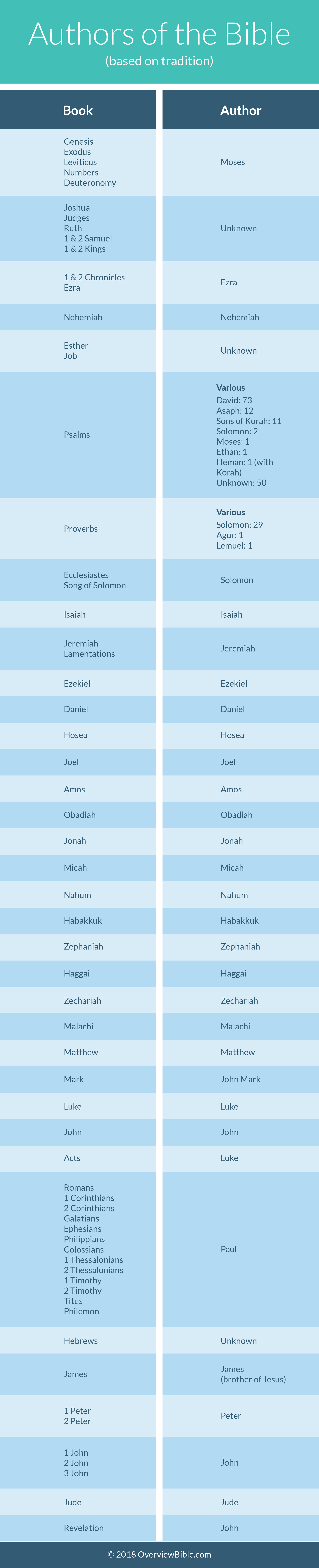
Moses is the prophet who leads Israel from slavery in Egypt to the edge of the promised land. He also wrote about 20% of your Bible. Of all the Old Testament prophets, nobody’s like Moses (Dt 34:10–12).
Moses is a Hebrew born in Egypt and raised in Pharaoh’s house. After killing an abusive Egyptian slave driver, Moses escapes the death penalty by running to the wilderness, where he marries and takes up life as a shepherd. Forty years go by, and God meets Moses in the wilderness (there’s a burning bush involved).
God commissions Moses: tell Pharaoh to let the Israelites go. Moses does so, Pharaoh resists, God judges Egypt with 10 plagues, and the Israelites leave. Moses takes the new nation to Mount Sinai, where the Lord brings Israel into a special relationship: from now on, Israel is God’s people, and God is Israel’s deity. Moses writes out the details of what that relationship looks like. These details are called the “Law,” and they take up most of the books attributed to Moses in the Bible.
The first book, Genesis, sets the stage for the other four books. It explains where the Jewish people came from, and how they ended up in Egypt. The next four books chronicle Israel’s physical and spiritual journey from Egypt to the promised land.
But Moses’ works aren’t over in Deuteronomy! He’s also the one who wrote Psalm 90.
Ezra is born long, long after Moses. But like the ancient prophet, Ezra leads a group of Israelites from exile in another nation back to the promised land.
Ezra is a scribe (someone who reads, writes, and interprets documents), and he’s especially well-versed in the Law of Moses (Ezra 7:6). He’s actually related to Moses: Ezra is a great-great-great(…)-grandson of Moses’ brother Aaron, which means he’s also got some priest blood in him (7:1–5). Ezra grows up in Babylon, but he is determined to move to become a missionary to his homeland (7:10), so he takes a group of Jews back to Jerusalem and begins teaching the people God’s ways.
Ezra is a key player in the books of Ezra and Nehemiah. He’s a religious leader in Jerusalem who calls the people around him to holiness.
The Jewish Talmud says Ezra wrote the book of 1 & 2 Chronicles (yes, they’re really two parts of the same book), and the book of Ezra. If this is the case, it makes Ezra the second-most prolific author of the Bible. Not bad for a guy you never hear about, right?
Nehemiah is a cupbearer to the king of Persia when he gets some disturbing news: his countrymen back in Jerusalem are in dire straits, and the city is in shambles (Neh 1:3). Nehemiah then gets the go-ahead from King Artaxerxes to rebuild the city walls and gates, and takes off for Jerusalem.
And get this: he gets the wall rebuilt in just 52 days (6:15).
Nehemiah’s more than a wall builder, though. Artaxerxes makes him the governor of Judah (Neh 5:14), and Nehemiah uses this position to point the people to God. He’s the one stationing soldiers, commissioning singers in the temple, and making sure the temple stays clean. Plus, he teams up with Ezra to rededicate the people to God (10:28–39) and hold them to their promises (13:4–31).
Nehemiah wrote the book that bears his name—and he wrote it in the first person. Nehemiah has a very transparent writing style, often breaking from his story to record a prayer he made to God (4:4; 13:22).
You’ve all heard of this guy. He’s the shepherd boy who killed Goliath the giant. He’s the war-hero king who delivered Israel from her enemies and established Jerusalem as the capital of Israel. He’s the jerk who killed off Uriah so he could have Uriah’s wife. And maybe most importantly, he’s a messiah: someone anointed by God to rule the people in wisdom and justice.
David is the focal character in the books of 1 & 2 Samuel and 1 & 2 Chronicles, and the books of Ruth and Kings tell us all about his family. David’s one of the Bible’s most important characters, but that doesn’t have all that much to do with David. He’s important because God makes a special promise to him: from David will come an everlasting kingdom with an everlasting king. Spoiler alert: that’s Jesus.
Somebody may have told you that David wrote the book of Psalms, but that’s not really the case. David only wrote about half of the Psalms—73 out of all 150, to be precise (though the Latin Vulgate and Septuagint credit a few more to him). Even so, that’s a lot more than any other psalmist.
When Solomon succeeds his father David as king of all Israel, the Lord appears to him in a dream. He gives Solomon the ultimate “blank check”: Solomon names anything he wants, and God will give it to him. Instead of asking for cash or the heads of his enemies, Solomon just asks God for wisdom. And boy, does God deliver:
Now God gave Solomon wisdom and very great discernment and breadth of mind, like the sand that is on the seashore. Solomon’s wisdom surpassed the wisdom of all the sons of the east and all the wisdom of Egypt. For he was wiser than all men, than Ethan the Ezrahite, Heman, Calcol and Darda, the sons of Mahol; and his fame was known in all the surrounding nations. (1 Ki 4:29–31)
Solomon came up with 3,000 proverbs and 1,005 songs (1 Ki 4:32). Lucky for us, a lot of that wisdom is part of our Bibles.
Solomon is traditionally credited for authoring the books of Ecclesiastes and Song of Solomon. In the first, he asks, “What’s the point of even existing?” In the second, he celebrates love, marriage, and all kinds of sexual privileges that come with that.
Solomon contributes to two more books of the Bible as well. He’s the main writer in Proverbs, which is a book of principles for making decisions in wisdom and justice. Most of the first 29 chapters were written or curated by Solomon. The wise king also joins his dad in the book of Psalms: Numbers 72 and 127 are Solomon’s.
When David commissions the temple in Jerusalem, he appoints Asaph and his family to lead worship (1 Ch 16:5). We don’t know much about Asaph, except that he’s a singer from the tribe of Levi (2 Ch 5:12). He and his family must have been some awesome songwriters because 12 of the Psalms are credited to him (Ps 50; 73–83).
When Moses is leading Israel through the wilderness, a Levite named Korah challenges Moses’ leadership. That doesn’t end well—the earth swallows up Korah and his followers.
But Korah’s sons survive, and they have quite a legacy in the Bible through their music. The descendants of Korah wrote 11 Psalms:
Before anyone gets overly excited, no, a Masters of the Universe character did not author part of the Bible (as far as I can tell). But the similarity in name is pretty funny.
Heman was a wise man who co-authored the eighty-eighth psalm with the sons of Korah. He was wise enough to compare to Solomon, but not wiser (1 Ki 4:31).
Oh, look, another psalmist! Like his relative Heman, Ethan was one of the wisest men in the world. You know, besides Solomon (1 Ki 4:31). He wrote Psalm 89.
We don’t know much about the author of Proverbs 30. He must have been wise enough for the Jews to include in their book of wisdom, but he doesn’t think to highly of his smarts compared to God’s:
Surely I am more stupid than any man, And I do not have the understanding of a man. Neither have I learned wisdom, Nor do I have the knowledge of the Holy One. (Pr 30:2–3)
Again, the Bible tells us very little about this author. Lemuel was a king. possibly of a place called Massa (31:1). Some Bibles translate his intro to call him the “king of Massa,” but we’re not sure where that would be.
Here’s something cool about Lemuel: his contribution to the Bible is pretty much a tribute to his mom. She taught her son well, and now he’s passing on her wisdom to his readers.
Isaiah is the earliest, and arguably the most preeminent of the Major Prophets. His ministry spans the reign of four kings, and he seems to be responsible for some of the royal records (2 Ch 2622; 32:32). Isaiah marries a prophetess (Is 8:3) and has two sons.
In addition to proclaiming the word of God to the nation, Isaiah gives personal advice to the kings of Judah. He tells King Ahaz not to worry when the kingdom of Israel and Aram make war against Jerusalem (Is 7:3–4). He reassures King Hezekiah that the Lord will protect Judah from Assyrian armies (2 Ki 19:1–7; Is 37:1–7), but warns him that Jerusalem will one day be sacked by the Babylonians (Is 39:5–7).
And of course, the book of Isaiah is traditionally credited to him (though his disciples seem to have contributed to the body of work over time). His prophecies cover the rise of Persian emperor Cyrus, the birth, death, and resurrection of Jesus, and the coming kingdom of God.
He’s the famous “weeping prophet” from the priests in the land of Benjamin (Jer 1:1). Jeremiah begins his prophetic ministry at a young age (Jer 1:6), and spends most of his time warning the nation of Judah that judgment is coming. He warns them about multiple Babylonian attacks, but the kings of Judah just won’t hear it. Jeremiah outlasts all the kings, though, and ends up offering counsel to the refugees of Jerusalem and the surrounding area. But even they don’t listen.
Jeremiah is like the Peter Parker of the Bible: the dude just can’t catch a break.
Books of the Bible Jeremiah wrote
Forget what you’ve been told about Psalms: Jeremiah is actually the longest book of the Bible. And that’s not all of Jeremiah’s writings. According to tradition, Jeremiah wrote the Book of Lamentations, too. This book is a group of five acrostic poems that mourn the fall of Jerusalem. Jeremiah also wrote a few more dirges when the good king Josiah died in battle (2 Ch 35:25).
Ezekiel is one of the many Jews taken captive to Babylon (Ezek 1:1). He’s a priest from the tribe of Levi (1:3), but the Lord chooses him to do much more than make sacrifices. God sets up Ezekiel as the “watchman” for the Jews, because as bad as it is now, they’re about to get themselves into a lot more trouble.
Ezekiel makes a lot of sacrifices in his ministry. He eats cakes cooked over poop (4:12–15). He lies on his side for 430 days(4:4–6). His wife dies, but he doesn’t get a chance to mourn (24:15–24). He doesn’t have it easy.
But his prophecies are phenomenal. He sees the Lord enthroned above the cherubim (10:1–2). He sees the temple of God destroyed and rebuilt. He sees dry bones growing ligaments and flesh. He’s the watchman, and he watches some crazy things.
You’ve heard of this guy and his lion’s den episode. Daniel is a young nobleman from Judah who’s taken captive by King Nebuchadnezzar (Da 1:3, 6). Exiled to Babylon, Daniel quickly distinguishes himself from the other boys for his wisdom (1:20), and he’s one of the few characters in the Bible that reliably interprets other people’s dreams (2:28). He becomes a chief government officer in both the Babylonian and Persian empires (2:48; 5:29; 6:1–3).
And he also has some pretty intense visions. His prophecies tend to concern two major themes.
The future of the world’s kingdoms: Babylon, Persia, Greece, Rome, and the unshakable kingdom of God.
The future of God’s people: the Messiah, the temple, and Israel’s part in God’s long-term plan.
Daniel’s a wise man and he wrote an important book for those who want to study biblical prophecy.
Hosea’s claim to fame: God told him to enter a really unhealthy marriage.
Seriously, God has Hosea marry a prostitute and have a few kids (Hos 1:2). And Hosea does. When his wife takes up her old trade and starts sleeping with other men, God tells him to go bring her back home as his wife again.
Why? Because Israel has turned away from her relationship with God and chased idols instead. Israel is going to deal with the consequences of her actions, but the Lord plans to bring her back to him, just like Hosea brings back his wife (3:5).
All we know about this prophet is his father’s name: Pethuel. Joel writes a brief book of prophecy that explains two important phenomena: the current plague of locusts and the coming day of the Lord.
Amos is a shepherd from Tekoa, a little town in the Southern Kingdom of Judah. The Lord gives him visions and calls him to journey north to prophesy against the king of Israel. As you can imagine, the false priests in Israel want to shut this Southerner down (Am 7:12–13).
Amos is an interesting character in that it seems he has no background in public ministry. When the false priest Amaziah tells Amos to go prophesy somewhere else, Amos responds: “I am not a prophet, nor am I the son of a prophet; for I am a herdsman and a grower of sycamore figs (Am 7:14).”
We don’t know much about this guy, except that he made a short prophecy against Edom. We don’t even get an “Obadiah, son of X” intro to his book, either, so we really don’t have much to go on.
One of the more famous characters in the Bible (albeit his is one of the least-read books). Jonah is a prophet to the Northern Kingdom of Israel (2 Ki 14:25), but the Lord sends him to Nineveh to warn the Assyrians of God’s coming judgment. Jonah sails in the other direction instead, gets thrown overboard, and spends three days in the belly of a big fish.
The fish spits him up, and Jonah is again called to preach in Nineveh. This time, Jonah obeys. But when the Ninevites repent, God spares them—and Jonah isn’t too pleased about that.
He is traditionally credited as the author of Jonah. If that’s the case, he must have had a moment of clarity after the events took place.
Micah is a prophet from Moreshetch in the Southern Kingdom of Judah, but he preaches to the people in both the North and the South (Mic 1:1). We don’t know much more about Micah, but we do know that by the time of Jeremiah (around a century later), the elders in Judah considered him to be a true prophet.
In fact, the people quote Micah to save Jeremiah from the death sentence. When Jeremiah prophesies that Jerusalem and the temple will be sacked, the priests and false prophets try to get him killed (Jer 26:8, 11). But the officials and the people of the city remember Micah’s prophecies against Jerusalem and stop the priests from murdering Jeremiah (26:17–19).
Nahum is a prophet, and calls himself an “Elkoshite” in his oracle against Nineveh (Na 1:1). We’re really not sure where Elkosh is, so we don’t know much more about Nahum.
We don’t know much about this minor prophet, aside from his songwriting ability. The third chapter of his book is a prayer-psalm, one of the only shiggaion examples in the Bible ( Hab 3:1).
Zephaniah has some royal blood in him. He opens his tiny book of the Bible with his genealogy—which traces back to Hezekiah, the righteous king (Zep 1:1).
Haggai writes a very brief account of his ministry in the Bible. He encourages the Jews to finish rebuilding the temple of God, and his ministry is noteworthy enough for the scribe Ezra to give him a nod (Ezr 5:1–2). His recorded ministry spans about three months and 24 days (Hag 1:1; 2:10).
Haggai is the most specific of the Minor Prophets when it comes to dates: he gives the month and day of every message God sends him. Way to clock in your hours, Haggai!
Zechariah’s ministry gears up about halfway through Haggai’s (Zec 1:1), and he too encourages the people to get off their duffs and complete the temple (Ezr 5:1–2). Like Jeremiah, Zechariah begins delivering messages from God as a young man (Zec 2:4). He wrote down his visions and messages, giving us the book of Zechariah in the Bible.
In addition to being a prophet, Zechariah seems to be among the priests (Zec 7:2–5; Neh 12:16), which would mean he’s from the tribe of Levi.
Malachi is the last of the prophets to contribute to the Old Testament. He calls the post-exilic Jews to reconnect with the Lord, but apart from this, we don’t know much about him.
Matthew is one of the 12 apostles of Jesus and one of the four evangelists who wrote down Jesus’s story. When we meet Matthew, he’s a tax collector for Rome. Tax collectors weren’t very popular in Israel, because they collected money from fellow Jews to pay a heathen king. But when Jesus calls Matthew to follow him, Matthew closes his booth down to serve the true King of the Jews. Then he brings Jesus over for dinner (Mt 9:9–10).
Matthew is called Levi in the other gospels, which may indicate that he’s from the tribe of Levi—we’re not sure (Mk 2:14–15; Lk 5:27–29).
Mark’s an interesting character in the background of the New Testament. We first meet Mark in the book of Acts. When Peter miraculously escapes from prison, he goes to Mark’s mother’s house (Ac 12:12). Later, Paul and Barnabas bring Mark along on their missionary journey as a helper, but he leaves them and goes back to Jerusalem (13:5, 13). When Paul and Barnabas prepare for their second journey, Barnabas suggests bringing John Mark again, but Paul won’t hear it (15:37–38). Paul and Barnabas disagree so sharply that they split up: Barnabas takes Mark to Cyprus, and Paul starts a new missionary team (15:39–40).
Mark matures, though. Decades later, Mark is considered useful to Paul (2 Ti 4:11) and a son to Peter (1 Pe 5:13). According to tradition, Mark is the one who writes down Peter’s stories of Jesus—which is how we got the Gospel of Mark.
Luke is a physician who accompanies Paul through thick and thin (Co 4:14; 2 Ti 4:11). His skills probably come in handy, because Paul takes a lot of beatings (2 Co 24ff).
But Luke’s greatest legacy is his contribution to the New Testament. Luke writes more of the NT than anyone else (yes, even more than Paul). Luke’s a meticulous journalist who sets out to record the life and ministry of Jesus in consecutive order (Lk 1:1–4) and later records the history of the early church (Ac 1:1–2). He composes these accounts on behalf of a mysterious Christian named Theophilus, who wants to learn more about his Christian faith.
He’s another member of the 12 apostles, a former fisherman from Galilee who follows Jesus (Mk 1:19–20). The Lord gives John and his brother James the nickname “Sons of Thunder” (Mk 3:17). The Bible doesn’t say how he earned this nickname, but John does seem to have a stormy personality at times (Lk 9:51–56).
After the resurrection, John becomes a pillar of the early church (Ga 2:9). He writes a persuasive account of Jesus’ earthly ministry, death, and resurrection, and then writes four letters (the last one, Revelation, includes many apocalyptic visions). According to tradition, John becomes an elder at the church at Ephesus. He is eventually exiled to the Isle of Patmos (Rev 1:9).
Fun fact: of all the epistles in the New Testament, John writes the longest (Revelation) and the shortest (3 John). In fact, 3 John is the shortest book of the Bible.
Paul may not have the word count that Moses has, but he writes more individual documents than any other biblical author—13, to be exact.
When we first meet Paul, he’s not leading the church: he’s leading the charge against it. Paul (also called Saul) kidnaps Christians from the regions around Judea and brings them to Jerusalem to suffer the punishment for blasphemy. That punishment was often prison or death (Ac 8:3; 9:1–2).
But when Jesus stops Paul on the road to Damascus, Paul is forever changed. He becomes an apostle, the face of the church to the non-Jews around the Roman empire (Ep 3:1, 8). He travels across the world planting churches and spreading the gospel of Jesus Christ.
Paul’s letters to the Christians spread across the world make up his contribution to the Bible. Some of these letters were written to churches he had planted, others were to churches he hoped to visit someday. Paul also wrote to specific leaders in the local churches, like Timothy, Titus, and Philemon.
James the Just is the younger brother of Jesus (Mt 13:55; Mk 6:3), the son of Mary and Joseph. James doesn’t believe in Jesus while the Lord is going about his earthly ministry (Jn 7:5). But that all changes after Jesus rises from the dead. Jesus specifically appears to James (1 Co 15:7), and afterward, James becomes one of the main leaders in the early church.
James is especially savvy when it comes to balancing freedom in Christ with respect for God’s holiness. When the church is undecided on how Gentiles should treat the Law of Moses, James settles the matter with a few pointers (Ac 15:13–21).
Later, James writes a letter to the Christian Jews scattered across the world, encouraging them to keep working out their faith. We call this letter the book of James.
You all know Peter. He’s the leader of the 12 apostles (Mt 10:2) and a pillar in the early church (Ga 2:9). Just as Paul is entrusted with bringing the gospel to the Gentiles, Peter is the face of the gospel to the Jews (Ga 2:7).
This guy is pretty hardcore. He walks on water (Mt 14:29), cuts off some guy’s ear to protect Jesus (Mk 14:29, 31; Jn 18:10), and boldly declares that Jesus is the anointed one, the Christ (Mt 16:16). Yes, he’s also the one who denies Jesus three times at the Lord’s trial (Jn 18:15–16), but the resurrection totally transforms him. When the Holy Spirit comes to the church, Peter openly preaches the gospel of Jesus in the city.
Peter wrote two books of the Bible, and both are named after him. The first explains how Christians should live as aliens in this world: even though we’ll suffer, it’s nothing compared to the glory to come. The second letter urges Christians to remember what Peter has taught them even after he dies (2 Pe 1:13–14).
Jude is Jesus’ and James’ younger brother (Jude 1). Like James, he didn’t believe in Jesus during Jesus’ ministry on earth (Jn 7:5), but after the resurrection, he became a Christian. Jude writes one book of the Bible: a letter urging believers to “contend for the faith” (Jude 3–4).
The forensic use of fingerprints is a relatively recent development, however, fingerprints have been found in ancient ruins thousands of years old. Potters used fingerprints to mark their wares and used them as “signatures” on clay tablets for commercial purposes. Buried by the sands of time, such fingerprints remained indelible until archaeologists uncovered them.
As impressive as the longevity of human fingerprints are, there is a different kind of fingerprint that is much more important, the fingerprint of our life, that we leave behind. Like our physical fingerprints that are soon gone, such may be the case with our lives if we live concerned only with ourselves and the present physical things of this earth. After we are gone, our lives may be soon forgotten with no lasting value. But we have the opportunity to live in such a way that we can make a difference for all eternity.
Just as physical fingerprints are unique to each individual, the people and causes we touch for Christ in this life will be unique to each of us. No one has your physical fingerprints; neither can anyone leave the mark on this world that you can. No one else has your gifts and abilities; no one has your calling; no one has the specific mix of friends and family that you have. And most importantly, no one will receive the guidance from the Holy Spirit that you will receive in terms of touching this world and making a difference in the lives around you for eternity.
Just as your fingerprint is unique, you are unique in God’s kingdom. There are certain lives that only you can touch in your unique way to affect them for eternity. We each have the opportunity to leave our fingerprint on every person, every place, every circumstance, and every event as we go through life if we look beyond ourselves to the eternal.
How do we leave our fingerprints in this world in an eternal way? By reaching out and touching, changing, loving, and encouraging those we encounter in this world. When we leave the presence of others, let us leave behind an imprint of the love of God in Christ. Let us leave behind an indelible mark that people will never forget; a mark that, though unseen physically, will remain for eternity.







 Sharing Jesus