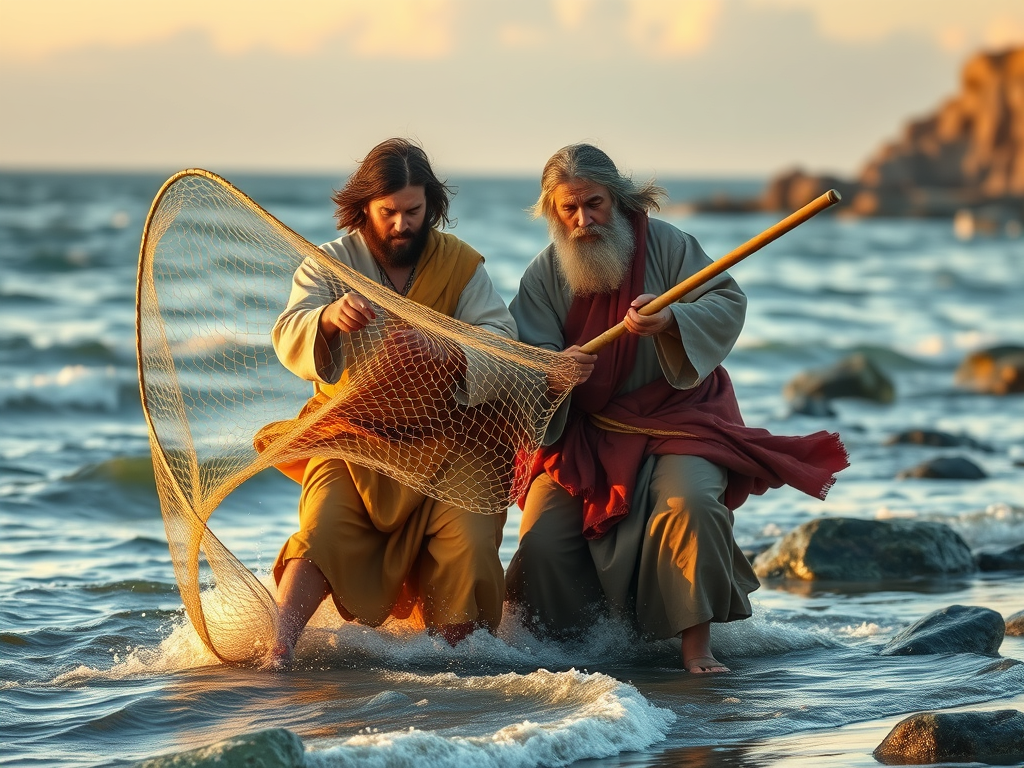
“As Jesus was walking beside the Sea of Galilee, he saw two brothers, Simon called Peter and his brother Andrew. They were casting a net into the lake, for they were fishermen. “Come, follow me,” Jesus said, “and I will send you out to fish for people.” At once they left their nets and followed him.” Matthew 4:18-20
I love to fish. I have fished for as long as I can remember. When I was younger, it was all about catching fish. If the fish weren’t biting, I was disappointed. Now that I am older, I just enjoy being out on the water fishing. If they aren’t biting, that’s okay. I just keep on fishing, because I know that in due time, they will start biting again. Meantime it is a relaxing way to refresh the mind and spirit.
When Jesus called Peter and Andrew to follow him and become fishers of men, he didn’t promise them a harvest. It is the same with us. God didn’t promise us a harvest of Christians. Some of us plant seeds, others do the watering, and others may do the harvesting. The important thing is that we keep on fishing.
James Hudson Taylor was a missionary to China for over fifty years. He spent many years laboring in China, seeing few converts. But he kept on fishing. Today, he is regarded as one of the greatest missionaries ever. The China Inland Mission (CIM), which he founded in 1865, became the largest of many missionary organizations in China. By 1910, it had more than 800 missionaries in the country, created 125 schools, and converted more than 20,000 Chinese to Christianity, as well as establishing more than 300 stations of work with more than 499 local helpers based in all 18 provinces. Cim is now known as OMF International.
James Taylor planted and saw very little of the harvest. But one day in heaven he will meet them all. A wise man once said, “ anyone can count the seeds in an apple, but only God can cout the apples in a seed.” When we keep on fishing, planting seeds, we have no way of knowing what the harvest will be generations from now. One seed could produce a harvest of thousands.
It is easy to become discouraged and stop fishing when we don’t see any results. We stop doing what God places before us. I often see it in older people. They feel they done their time, now let someone younger do it. Let someone younger do the fishing. Many others just don’t want to put out the effort; they would rather coast through their Christian life. God didn’t call us to be aquarium keepers; He called us to be fishermen.
Jesus said: “I tell you, open your eyes and look at the fields! They are ripe for harvest. Even now the one who reaps draws a wage and harvests a crop for eternal life, so that the sower and the reaper may rejoice together.” John 4:35-36
The name Adonai (Adonay) is found over four hundred times in the Bible, and this name reveals God’s Sovereignty. The name literally translates as “master” or “ruler”. Thus, the name Adonai conveys the concepts of “dominion,” “rulership,” and “ownership.” Therefore, when God is referred to in Scripture in the plural form Adonai, it acknowledges Him as the sovereign owner of all His creation. The psalmist pens in Psalm 97 that God is “the (Adonai) of the whole earth.” He is not only the Creator (Elohim), but He is also the Owner (Adonai).
Yet it doesn’t merely connote ownership; it also implies responsibility to lovingly care for that which was owned. It is the responsibility of the master to provide for, protect, and guide those whom He owns, to care for them with loving kindness. When we understand God owns us, and has the right to rule over us, the only adequate response must be complete submission to Him. Submission is not weakness; it is powerful when it is the All-powerful Adonai God we submit ourselves to.
Unfortunately, too many Christians today go through the motions of religion without experiencing the full power of Adonai. They don’t like the idea of being “owned” or submitting to anyone, not even Adonai. This concept of submission or being owned does not sit well with us. It does not come naturally to anyone. But if we truly want to experience God’s best in our lives, we must deliberately make the choice to bow in submission to our Creator, surrendering our own will to His, with the solid assurance that He is good, He will always be for us, not against us, and His way is always best. Everything that He does is always done out of His great love for us.
Too many people want God to do mighty things for them without ever allowing Him the right to own them and to rule them. If we are not willing to surrender ownership over our time, thoughts, talents, and treasures to Him, we will never experience the full power of God fulfilling His Word in our lives. Study these names of God. Surrender to God and honor Him as Adonai, your Master and ruler, and see what a difference He will make in your life!
Thirty Names Of God (And Where To Find Them!)
Jehovah El Emeth: LORD God of Truth
Into Your hand I commit my spirit; You have ransomed me, O Lord (Jehovah), God (El) of truth (Emeth). Psalm 31:5
Jehovah El Gemuwal: The LORD God of recompense
For the destroyer is coming against her, against Babylon, and her mighty men will be captured. Their bows are shattered; For the Lord (Jehovah) is a God (El) of recompense (Gemuwal), He will fully repay. Jeremiah 51:56
Jehovah Elohim Tsaba: LORD God of Hosts
You, O Lord (Jehovah) God (Elohim) of hosts (Tsaba), the God of Israel, Awake to punish all the nations; Do not be gracious to any who are treacherous in iniquity. Psalm 59:5
Jehovah Elohim Yeshua: LORD God of My Salvation
O LORD (Jehovah), the God (Elohim) of my salvation (Yeshua), I have cried out by day and in the night before You. Psalm 88:1
Elohei Chasdi: God of my kindness, goodness, and faithfulness
O my strength, I will sing praises to You; For God is my stronghold, the God (Elohim) who shows me lovingkindness (Chesed). Psalm 59:17
Elohim Bashamayim: God in Heaven
When we heard it, our hearts melted, and no courage remained in any man any longer because of you; for the Lord your God, He is God (Elohim) in heaven (Bashamayim) above and on earth beneath. Joshua 2:11
El Bethel: The God of the House of God
He built an altar there and called the place El-bethel (El Bethel), because there God had revealed Himself to him when he fled from his brother. Genesis 35:7
Elohe Chaseddi: The God of My Mercy
My God in His lovingkindness will meet me; God will let me look triumphantly upon my foes. Psalm 59:10
El Elohe Yisrael: The mighty God of Israel
Then he erected there an altar, and called it El-Elohe-Israel (El Elohe Yisrael). Genesis 33:20
El Emunah: The Faithful God
Know therefore that the Lord your God is God; he is the faithful God (El Emunah), keeping his covenant of love to a thousand generations of those who love him and keep his commandments. Deuteronomy 7:9
Elohei Tehillati: God of my praise
Verse: My God (Elohei), whom I praise (Tehillati), do not remain silent. Psalm 109:1
El Hakabodh: The God of Glory
Verse: The voice of the Lord is over the waters; the God of glory (El Hakabodh) thunders, the Lord thunders over the mighty waters. Psalm 29:3
Elohim Chayim: The Living God.
Verse: This is how you will know that the living God (Elohim Chayim) is among you and that he will certainly drive out before you the Canaanites, Hittites, Hivites, Perizzites, Girgashites, Amorites, and Jebusites. Joshua 3:10
El Hayyay: God of My Life.
Verse: By day the Lord directs his love, at night his song is with me— a prayer to the God of my life (El Hayyay). Psalm 42:8
Elohim Kedoshim: Holy God.
Verse:Joshua said to the people, ‘You are not able to serve the Lord. He is a holy God (Elohim Kedoshim); he is a jealous God. He will not forgive your rebellion and your sins.’ Joshua 24:19
Elohei Ma’uzzi: God of My Strength.
Verse: God is my strong fortress (Elohei Ma’uzzi); And He sets the blameless in His way. 2 Samuel 22:33
Elohim Machase Lanu: God Our Refuge
Verse: Trust in him at all times, you people; pour out your hearts to him, for God (Elohim) is our refuge (Machase Lanu). Psalm 62:8
Eli Maelekhi: God My King.
Verse: Your procession, God, has come into view, the procession of my God (Eli) and King (Maelekhi) into the sanctuary. Psalm 68:24
Ben Elohim: The Son of God.
Verse: Simon Peter answered, ‘You are the Christ the Son (Ben) of the living God (Elohim).’ Matthew 16:16
20.Elohenu Olam: Our Everlasting God
Verse: For this God is our God (Elohenu) for ever and ever (Olam); he will be our guide even to the end. Psalm 48:14
Elohim Ozer Li: God My Helper.
Verse: Surely God (Elohim) is my help (Ozer Li); the Lord is the one who sustains me. Psalm 54:4
El Rai: God Sees Me
Verse: She gave this name to the Lord who spoke to her: ‘You are the God (El) who sees (Rai) me,’ for she said, ‘I have now seen the One who sees me.’ Genesis 16:13
El Sali God: my Rock.
Verse: The Lord lives, and blessed be my rock (El Sali); and exalted be God, the rock of my salvation. 2 Samuel 22:47
El Shaddai:Almighty God
Verse: When Abram was ninety-nine years old, the Lord appeared to him and said, ‘I am God Almighty (El Shaddai); walk before me faithfully and be blameless. (Genesis 17:1)
El Simchath Gili: God My Exceeding Joy.
Verse: Then I will go to the altar of God, to God (El), my joy (Simchath Gili) and my delight. I will praise you with the lyre, O God, my God. Psalm 43:4
Elohim: The plural name of El, referring to the one, true Creator God, Divine, Deity.
Verse: In the beginning God (Elohim) created the heavens and the earth. The earth was formless and void, and darkness was over the surface of the deep, and the Spirit of God (Elohim) was moving over the surface of the waters. Genesis 1:1,2
Jehovah Lord: master and relational God
Verse: This is the account of the heavens and the earth when they were created, in the day that the Lord (Jehovah) God made earth and heaven. Genesis 2:4
Jehovah El Elohim: The LORD God of Gods, the LORD, mighty, powerful, strong One over all.
Verse: The Mighty One, God, the Lord (Jehovah), the Mighty One (El), God (Elohim), the Lord! He knows, and may Israel itself know. If it was in rebellion, or if in an unfaithful act against the Lord do not save us this day! Joshua 22:22
Jehovah Elohim Ab: The LORD God of your forefathers
Verse: So Joshua said to the sons of Israel, “How long will you put off entering to take possession of the land which the Lord (Jehovah), the God (Elohim) of your fathers (Ab), has given you? Joshua 18:3
Jehovah El Elyon: The LORD, the Most High God
Verse: Abram said to the king of Sodom, “I have sworn to the Lord (Jehovah) God (El) Most High (Elyon), possessor of heaven and earth. Genesis 14:22
(Thanks to HeavenAwaits.com for the above material)
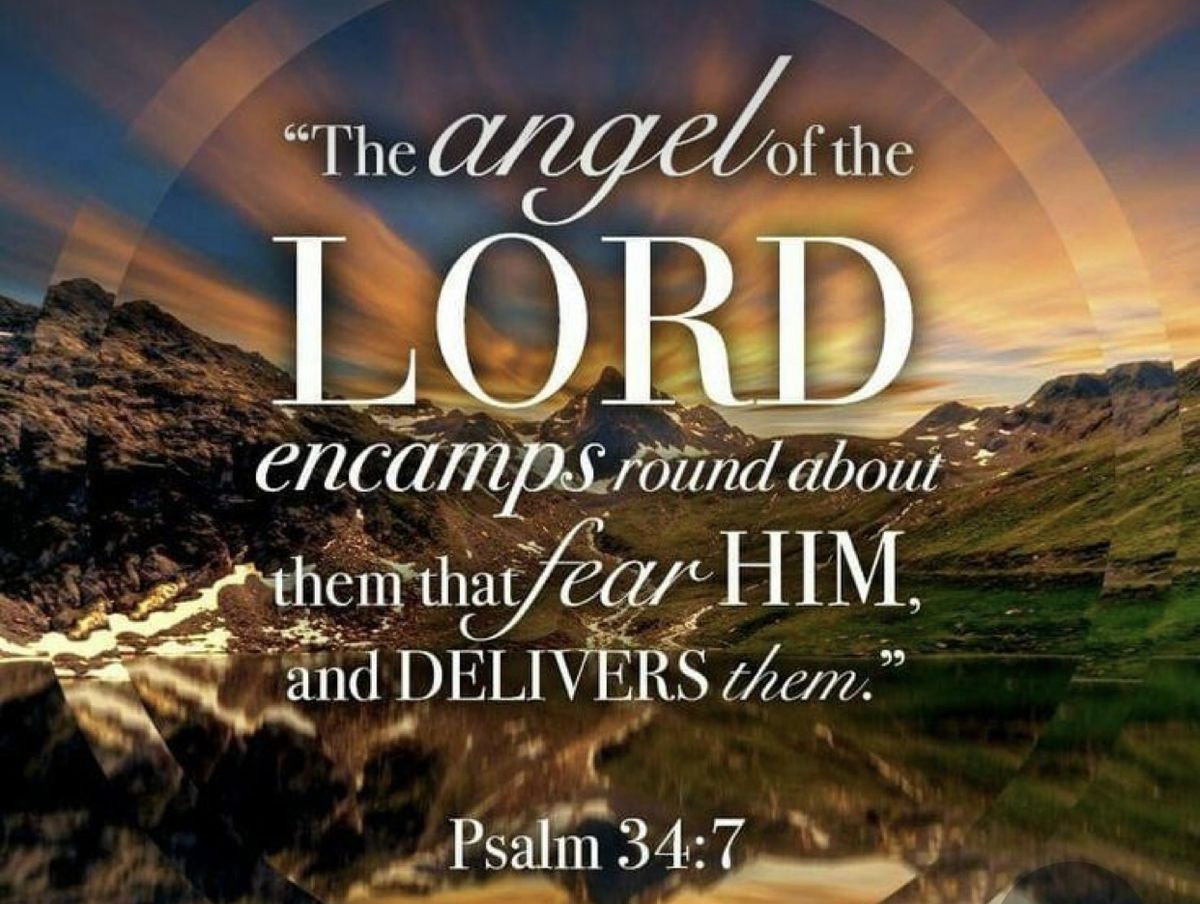
Throughout the Old Testament you will see a reference to “the angel of the Lord”. Who is the angel of the Lord? The angel seems to be not only of the Lord, but the Lord himself.
The first time we read about the angel of the Lord is in Genesis 16:7-13. In verse 10, the angel tells Hagar that he will increase her descendants so much that they will be too numerous to count. Could an angel do that? In verse 11 He refers to himself as Lord, and in verse 13, Hagar refers to Him as God.
“You are the God who sees me,” for she said, “I have now seen the One who sees me”
In Genesis 22:11 we see the angel of the Lord stopped Abraham from killing his son. In verse 12 He refers to Himself as God.
“But the angel of the Lord called out to him from heaven, “Abraham! Abraham!”
“Here I am,” he replied. “Do not lay a hand on the boy,” he said. “Do not do anything to him. Now I know that you fear God, because you have not withheld from me your son, your only son.” (Genesis 22:11-12)
Then in verses 15, the angel of the Lord again speaks to Abraham.
“The angel of the Lord called to Abraham from heaven a second time and said, “I swear by myself, declares the Lord, that because you have done this and have not withheld your son, your only son, I will surely bless you and make your descendants as numerous as the stars in the sky and as the sand on the seashore.” (Genesis 22:15-17).
When the angel of the Lord appears to Moses in the burning bush (Exodus 3:2-6), He leaves no doubt about who He is, with His many references to being God.
“There the angel of the Lord appeared to him in flames of fire from within a bush. Moses saw that though the bush was on fire it did not burn up. So Moses thought, “I will go over and see this strange sight—why the bush does not burn up.”
“When the Lord saw that he had gone over to look, God called to him from within the bush, “Moses! Moses!”
And Moses said, “Here I am.”
“Do not come any closer,” God said. “Take off your sandals, for the place where you are standing is holy ground.” Then he said, “I am the God of your father, the God of Abraham, the God of Isaac and the God of Jacob.” At this, Moses hid his face, because he was afraid to look at God. (Exodus 3:2-6)
We see the angel of the Lord again in Numbers 22:21-38, when He confronts Balaam and his donkey. Here He reproofs Balaam and instructs him. In verse 38 Balaam refers to the angel of the Lord as God.
In Judges13, the angel of the Lord tells Manoah and his wife that they will have a son, (Samson), and gives them instructions for raising him. Later Manoah said to his wife, “We are doomed to die….We have seen God.”
In John 6:46, Jesus says that: “No one has seen the Father except the one who is from God”.
So who is “the angel of the Lord”? Obviously, it was not the Father who came as the Angel of the Lord. If it were God and it was not the Father, then it must have been the Son, our Lord. The Angel of the Lord is no ordinary angel.
What do we know about “the angel of the Lord”?
1. He is not an Angel.
2. He is not God the Father, because no man has seen the Father.
3. He is God, because the scriptures say He is.
4. He appears to be God, but separate from God (the Father) as Christ (the Son) and the Holy Spirit are.
5. He forgave sin, which only God can do.
Is this Christ? Did Christ walk upon the earth centuries before He was born a baby in Bethlehem? Not all Bible scholars are willing to say it is the Lord, but it certainly could have been, He was with Father from the beginning.
J. M. Wilson writes that while identifying him with God the Son is most tempting, “..it must be remembered that at best these are only conjectures that touch on a great mystery……The appearances of the angel of the Lord…..culminated in the coming of the Savior, and are thus a foreshadowing of, and preparation for, the full revelation of God in Jesus Christ. Further than this it is not safe to go.”
Most Bible scholars and students don’t hesitate to make that claim however. Calvin wrote:
“I am rather inclined however, to agree with the ancient writers, that in those passages wherein it is stated that the angel of the Lord appeared to Abraham, Jacob, and Moses, Christ was that angel.”
C. F. Dickason stated that the angel of the Lord “According to all evidence……seems to be the preincarnate Son.”
Billy Graham writes: “There are no grounds for questioning the very early and traditional Christian interpretation that in these cases there is a preincarnation manifestation of the second person of the Trinity.”
We know that Christ was here from the beginning, (John 1:1-4), and we can assume that “the angel of the Lord” was most likely Jesus.
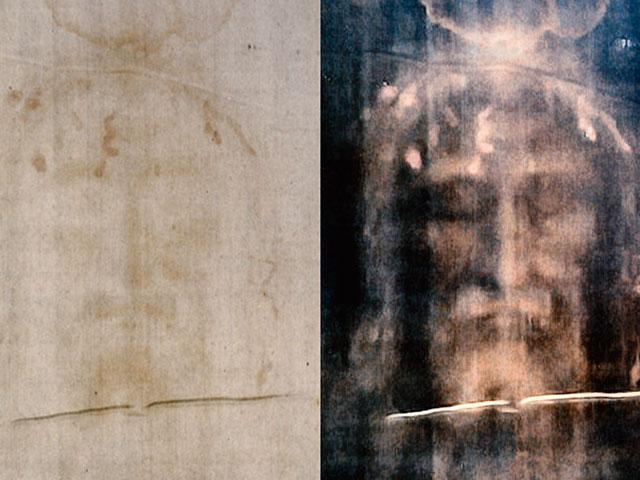
The Shroud of Turin, or Turin Shroud, is a length of linen cloth bearing the image of a man who is alleged to be Jesus of Nazareth. The cloth itself is believed by some to be the burial shroud he was wrapped in when he was buried after the crucifixion. The shroud is kept in the royal chapel of the Cathedral of Saint John the Baptist in Turin, northern Italy.
The origins of the shroud and its images are the subject of intense debate among theologians, historians, and other researchers. Diverse arguments have been made in scientific and popular publications claiming to prove that the cloth is the authentic burial shroud of Jesus, based on disciplines ranging from chemistry to biology and medical forensics to optical image analysis. In 1988, radiocarbon dating tests dated a corner piece of the shroud from the Middle Ages. Certain shroud researchers have challenged the dating, arguing the results were skewed by the introduction of material from the Middle Ages to the portion of the shroud used for radiocarbon dating.
The image of the “Man of the Shroud” has a beard, mustache, and shoulder-length hair parted in the middle. He is muscular and tall (various experts have measured him as from 1.70 to 1.88 m or 5 ft 7 in. to 6 ft 2 in). Reddish-brown stains are found on the cloth, showing various wounds that, according to proponents, correlate with the yellowish image, the pathophysiology of crucifixion, and the Biblical description of the death of Jesus.
Forensic doctors have interpreted markings on the cloth as follows:
1. One wrist bears a large, round wound, apparently from piercing (the second wrist is hidden by the folding of the hands) 2. Upward gouge in the side penetrating into the thoracic cavity. 3. Small punctures around the forehead and scalp 4. Scores of linear wounds on the torso and legs. 5. Swelling of the face 6. Streams of blood down both arms
 Sharing Jesus