Do you have doubts about who God is? Does He really exist? Is there proof?
Do you have doubts about who God is? Or if He really exists? What about the Bible? Is there proof that it is divinely inspired? Did Jesus actually die on the cross and then rise from the grave?
Yes! There is evidence for all of this, not only in the Bible, but also in secular documents. Thousands of Old Testament prophecies have been fulfilled, proving the scriptures to be true. For who but God knows the future? The Old Testament contains wisdom and advanced knowledge about nature, prophecy, medicine, sanitation, and science. A knowledge that was thousands of years ahead of its time. It would have been impossible for man to know these things at that time in history. There have been thousands upon thousands of archaeological finds that document the Scriptures. The life of Christ can be documented not only by the Bible but also by all the secular writings about Him. The proof abounds!
Eternity lasts a long time. Don’t take a chance on missing heaven because you have doubts or don’t believe. Why risk where you will spend eternity on what you were told or taught? Learn the facts for yourself.
Isn’t it odd that more people believe in heaven than believe in hell? People would like to believe that a loving God wouldn’t send anyone to hell. But there is a purpose for hell.
Why is there a hell? God created hell because of Satan. Before satan fell from grace, before he decided he wanted to be like God, even greater than God, there was no need for a place for sin. Before Satan rebelled against God, there was no sin.
Initially, Satan was an angelic being called Lucifer, meaning “morning star” or “shining one,” highlighting his original high status, beauty, and splendor. Due to pride and a desire to equal God, he was cast out, transitioning from “Lucifer” to “Satan,” meaning “adversary” or “accuser.”
Where does Satan live? While not explicitly detailed, it is inferred that he was cast down from heaven in verses such as Isaiah 14:12-15 and Ezekiel 28:12-17.
“How you are fallen from heaven, O Day Star, son of Dawn! How you are cut down to the ground, you who laid the nations low! You said in your heart, ‘I will ascend to heaven; above the stars of God. I will set my throne on high; I will sit on the mount of assembly in the far reaches of the north; I will ascend above the heights of the clouds; I will make myself like the Most High.’ But you are brought down to Sheol, to the far reaches of the pit. (Isaiah 14:12–15)
“Your heart became proud on account of your beauty, and you corrupted your wisdom because of your splendor. So I threw you to the earth; (Ezekiel 28:17)
While Satan no longer resides in heaven, it would seem he may have or had some access to heaven. The book of Job presents Satan as appearing before God in heaven, suggesting that, at least for a time, Satan had some entry to the heavenly realm. In Job 1:6-7 it’s written, “Now there was a day when the sons of God came to present themselves before the LORD, and Satan also came among them. The LORD said to Satan, ‘From where have you come?’ Satan answered the LORD and said, ‘From going to and fro on the earth, and from walking up and down on it.'”
Satan is described as a roaring lion prowling around seeking whoever he can destroy. So he is busy here on earth. Unlike God, he can only be in one place at a time; however, his demonic legions are everywhere, in the air and on earth. When Satan rebelled against God. One third of the angels rebelled with him. They were removed from heaven along with Satan. They are the demonic forces that are helping the devil in the unseen spiritual battle that is taking place constantly about us. The battle over the souls of men.
What is Sheol? In the Hebrew Scriptures, the word used to denote the realm of the dead is Sheol. It simply means “the place of the dead” or “the place of departed souls/spirits.” The New Testament Greek equivalent to Sheol is Hades, which is also a general reference to “the place of the dead.” The Old Testament doesn’t go into much detail, but it’s pictured as dark, dusky, and gloomy. Sheol is typically viewed under the rule of God’s enemy, Satan. However, God it is still in control. He is still King even there. Sheol is not like Hell. It is not the final place of confinement.
What is the Abyss? The Abyss is a place for the containment of evil spirits. Many Bible scholars believe that this is the same place referred to in 2 Peter 2:4 as “hell,” where some evil spirits are “in chains of darkness to be held for judgment.” The King James Version usually translates it as the bottomless pit.
In Luke 8, Jesus cast the Legion of demons out of a man, “and they begged Jesus repeatedly not to order them to go into the Abyss” (verse 31). The Abyss is obviously a place that the demons fear and try to avoid.
Another reference to the Abyss is when Satan was bound and cast into it. “And I saw an angel coming down out of heaven, having the key to the Abyss and holding in his hand a great chain. He seized the dragon, that ancient serpent, who is the devil, or Satan, and bound him for a thousand years. He threw him into the Abyss, and locked and sealed it over him, to keep him from deceiving the nations anymore until the thousand years were ended.” (Revelations 20:1-3) This is after the battle of Armageddon and before the thousand-year millennium.
Many Bible scholars believe that this is the same place referred to in 2 Peter 2:4 as “hell,” where some evil spirits are “in chains of darkness to be held for judgment.” It is clear from Scripture that God has ultimate power over all evil spirits. Some of the demons have been consigned to the Abyss and held captive there, while others seem to be able to move more freely upon the earth. Ultimately, all evil spirits will be consigned to the lake of fire, along with all unbelievers (see Revelation 20:10–15).
What is The Lake of Fire? The lake of fire is mentioned only in Revelation 19:20 and 20:10, 14-15, is the final hell, the place of eternal punishment for all unrepentant rebels, both angelic and human (Matthew 25:41). It is described as a place of burning sulfur, and those in it experience eternal, unspeakable agony of an unrelenting nature (Luke 16:24; Mark 9:45-46). Those in Hades/Sheol who have rejected Christ will have the lake of fire as their final destination.
Whether hell is literal fire is a subject of debate, with interpretations ranging from a physical place of burning sulfur (mentioned in Revelation 20:15) to a metaphorical state of eternal separation from God. While traditional views often interpret “fire and brimstone” literally as agonizing physical pain, others argue these are symbols representing intense spiritual, mental, and emotional torment. Jesus often used the term Gehenna (a burning trash heap outside Jerusalem) to describe hell, using it as a metaphor for destruction and severe judgment. Whatever hell is, it isn’t somewhere one will want to spend eternity.
Who goes to hell when they die, and why? Hell is a place of justice where the consequences of choices made on earth are carried out. Sin cannot enter heaven. While the thought of hell can be troubling, everyone has a choice. God is loving and merciful, always urging us towards repentance and grace. We are reminded that His desire is for us to choose life, joy, and full communion with Him. God does not send people to hell; they go there because they rejected God while here on earth. Hell is a reflection of the choices we make in life. Our hope is in God’s promise of salvation and the joy of eternal life with Him. Once we accept Jesus as our Lord and Saviour, our place in Heaven is secure.
“And do not grieve the Holy Spirit of God, with whom you were sealed for the day of redemption”. (Ephesians 4:30). This verse emphasizes that believers are marked by the Holy Spirit as God’s possession, serving as a guarantee of their salvation until they are redeemed on that final day.
What is the Great White Throne Judgment? The Great White Throne Judgment (Revelation 20:11-15) is the final, post-millennial judgment where Jesus Christ judges all unbelievers, both small and great, according to their works. Those whose names are not in the Book of Life are cast into the lake of fire, representing eternal separation from God.
At the Great White Throne Judgement, Jesus Christ sits as judge on a pure white throne, signifying absolute righteousness. The judgment takes place after the millennium and the final rebellion of Satan. This judgment is for the spiritually dead—all who did not accept Jesus as Savior—whose bodies are resurrected to stand before God. It should not be confused with the “Judgment Seat of Christ,” where believers are rewarded.
Records of every person’s deeds are opened to determine their sentence, those who’s name is not written in the Book of Life, will be condemned to the Lake of Fire, also known as the second death. The event is viewed as the ultimate manifestation of God’s justice, where every hidden action is brought to light.
It is the last of the Biblical judgments, marking the transition to the new heaven and new earth. It enforces the final, eternal separation between those who accepted and rejected God’s salvation. Satan, the demons, and all those that rejected Christ will be confined in hell for all eternity.
But those whose names are written in the Lamb’s book of life should have no fear of this terrible fate. By faith in Christ and His blood shed on the cross for our sins, we are destined to live eternally in the blessed presence of God.
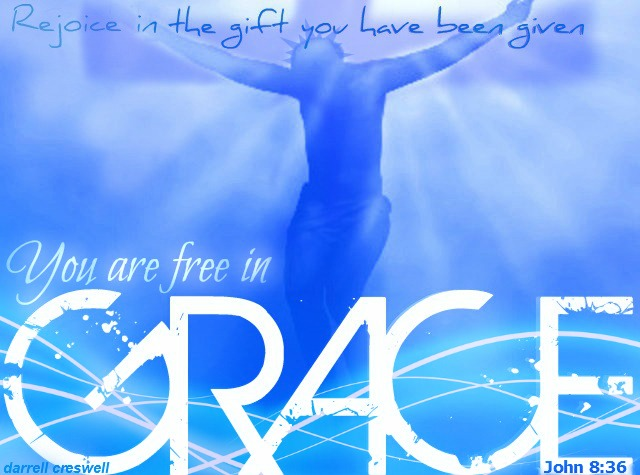
WHAT IS GRACE? Grace is us enjoying God’s riches free because Jesus paid the price with His blood on the cross. Grace is God giving us what we cannot earn and don’t deserve. When we come to Christ, we are not only forgiven, but because of His grace, our slate is wiped clean. Our record is pure, it’s as if we never sinned. Because of Grace, we have the unmerited favor of God.
“If we confess our sins, he is faithful and just and will forgive us our sins and purify us from all unrighteousness” (1 John 1:9).
“We are washed as white as snow” (Psalms 51:7, Isaiah 1:18).
You are saved, not because of what you do, but because of what Christ did. Christ paid for your sins with His blood on the cross. God’s grace is free to all who will accept it, but it is also priceless. The cost of our sins is far more than we could ever afford to pay, but Christ has taken our sin debt upon Himself and paid it for us.
This may very well be the most difficult spiritual truth for us to embrace. For some reason, people accept Jesus as Lord before they accept Him as Savior. It’s easier to comprehend His power than His mercy. We’ll celebrate the empty tomb long before we’ll kneel at the cross. We, like Thomas, would die for Christ before we’d let Christ die for us. We are justified, not by our worthiness, but because of the worthiness of Christ.
One day, we will all die. There is no avoiding it; we will all face death. That is certain!
“Everyone will die someday. Death comes to godly and sinful people alike. It comes to good and bad people alike. It comes to “clean” and “unclean” people alike. Those who offer sacrifices and those who don’t offer them also die. A good person dies, and so does a sinner. Those who make promises die. So do those who are afraid to make them. Here’s what is so bad about everything that happens on this earth. Death catches up with all of us.” Ecclesiastes 9:2-3 (NIrV
Death is the great equalizer. All the money, status, or fame can’t keep you from dying. When you are dead, you are just as dead as the poorest person on earth. You are just as dead as the least known person on earth.
It is only natural to fear the unknown, but the Bible makes it clear that death is not something to be feared. It is not the end, but the beginning. Life is not the opposite of death. Birth is the opposite of death. Birth and death are merely entrance and exit points to our time on earth. Life continues.
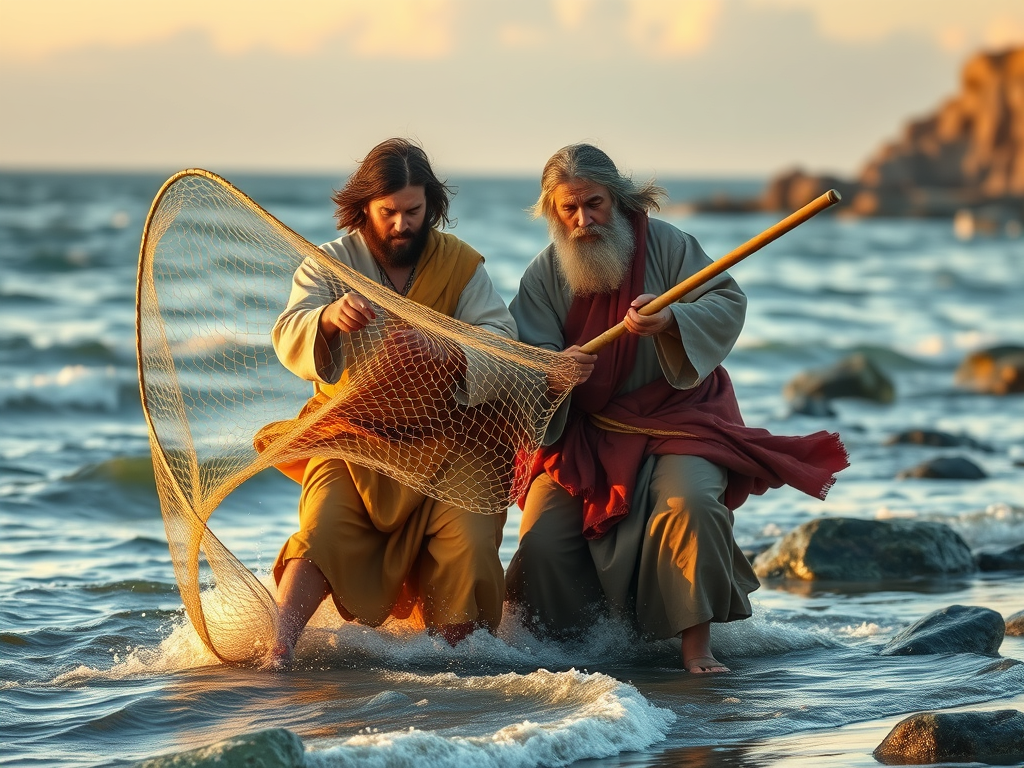
“As Jesus was walking beside the Sea of Galilee, he saw two brothers, Simon called Peter and his brother Andrew. They were casting a net into the lake, for they were fishermen. “Come, follow me,” Jesus said, “and I will send you out to fish for people.” At once they left their nets and followed him.” Matthew 4:18-20
I love to fish. I have fished for as long as I can remember. When I was younger, it was all about catching fish. If the fish weren’t biting, I was disappointed. Now that I am older, I just enjoy being out on the water fishing. If they aren’t biting, that’s okay. I just keep on fishing, because I know that in due time, they will start biting again. Meantime it is a relaxing way to refresh the mind and spirit.
When Jesus called Peter and Andrew to follow him and become fishers of men, he didn’t promise them a harvest. It is the same with us. God didn’t promise us a harvest of Christians. Some of us plant seeds, others do the watering, and others may do the harvesting. The important thing is that we keep on fishing.
James Hudson Taylor was a missionary to China for over fifty years. He spent many years laboring in China, seeing few converts. But he kept on fishing. Today, he is regarded as one of the greatest missionaries ever. The China Inland Mission (CIM), which he founded in 1865, became the largest of many missionary organizations in China. By 1910, it had more than 800 missionaries in the country, created 125 schools, and converted more than 20,000 Chinese to Christianity, as well as establishing more than 300 stations of work with more than 499 local helpers based in all 18 provinces. Cim is now known as OMF International.
James Taylor planted and saw very little of the harvest. But one day in heaven he will meet them all. A wise man once said, “ anyone can count the seeds in an apple, but only God can cout the apples in a seed.” When we keep on fishing, planting seeds, we have no way of knowing what the harvest will be generations from now. One seed could produce a harvest of thousands.
It is easy to become discouraged and stop fishing when we don’t see any results. We stop doing what God places before us. I often see it in older people. They feel they done their time, now let someone younger do it. Let someone younger do the fishing. Many others just don’t want to put out the effort; they would rather coast through their Christian life. God didn’t call us to be aquarium keepers; He called us to be fishermen.
Jesus said: “I tell you, open your eyes and look at the fields! They are ripe for harvest. Even now the one who reaps draws a wage and harvests a crop for eternal life, so that the sower and the reaper may rejoice together.” John 4:35-36
The Bible tells us that Satan prowls around like a roaring lion.
“Be alert and of sober mind. Your enemy the devil prowls around like a roaring lion looking for someone to devour. Resist him, standing firm in the faith, because you know that the family of believers throughout the world is undergoing the same kind of sufferings” 1 Peter 5:8-9 (NIV).
I live in the middle of the Hiawatha National Forest in Michigan’s Upper Peninsula on the northern border of the U.S. It is tens of thousands of acres of wilderness. We don’t have lions, as the Bible is speaking of, except for an occasional mountain lion. We do have bears and wolves. They are predators, and it is at night in the darkness that predators roam about, seeking something to devour. It is the same with Satan; he prowls in the darkness, seeking out those with whom he might destroy their relationship with Christ.
The name Adonai (Adonay) is found over four hundred times in the Bible, and this name reveals God’s Sovereignty. The name literally translates as “master” or “ruler”. Thus, the name Adonai conveys the concepts of “dominion,” “rulership,” and “ownership.” Therefore, when God is referred to in Scripture in the plural form Adonai, it acknowledges Him as the sovereign owner of all His creation. The psalmist pens in Psalm 97 that God is “the (Adonai) of the whole earth.” He is not only the Creator (Elohim), but He is also the Owner (Adonai).
Yet it doesn’t merely connote ownership; it also implies responsibility to lovingly care for that which was owned. It is the responsibility of the master to provide for, protect, and guide those whom He owns, to care for them with loving kindness. When we understand God owns us, and has the right to rule over us, the only adequate response must be complete submission to Him. Submission is not weakness; it is powerful when it is the All-powerful Adonai God we submit ourselves to.
Unfortunately, too many Christians today go through the motions of religion without experiencing the full power of Adonai. They don’t like the idea of being “owned” or submitting to anyone, not even Adonai. This concept of submission or being owned does not sit well with us. It does not come naturally to anyone. But if we truly want to experience God’s best in our lives, we must deliberately make the choice to bow in submission to our Creator, surrendering our own will to His, with the solid assurance that He is good, He will always be for us, not against us, and His way is always best. Everything that He does is always done out of His great love for us.
Too many people want God to do mighty things for them without ever allowing Him the right to own them and to rule them. If we are not willing to surrender ownership over our time, thoughts, talents, and treasures to Him, we will never experience the full power of God fulfilling His Word in our lives. Study these names of God. Surrender to God and honor Him as Adonai, your Master and ruler, and see what a difference He will make in your life!
Thirty Names Of God (And Where To Find Them!)
Jehovah El Emeth: LORD God of Truth
Into Your hand I commit my spirit; You have ransomed me, O Lord (Jehovah), God (El) of truth (Emeth). Psalm 31:5
Jehovah El Gemuwal: The LORD God of recompense
For the destroyer is coming against her, against Babylon, and her mighty men will be captured. Their bows are shattered; For the Lord (Jehovah) is a God (El) of recompense (Gemuwal), He will fully repay. Jeremiah 51:56
Jehovah Elohim Tsaba: LORD God of Hosts
You, O Lord (Jehovah) God (Elohim) of hosts (Tsaba), the God of Israel, Awake to punish all the nations; Do not be gracious to any who are treacherous in iniquity. Psalm 59:5
Jehovah Elohim Yeshua: LORD God of My Salvation
O LORD (Jehovah), the God (Elohim) of my salvation (Yeshua), I have cried out by day and in the night before You. Psalm 88:1
Elohei Chasdi: God of my kindness, goodness, and faithfulness
O my strength, I will sing praises to You; For God is my stronghold, the God (Elohim) who shows me lovingkindness (Chesed). Psalm 59:17
Elohim Bashamayim: God in Heaven
When we heard it, our hearts melted, and no courage remained in any man any longer because of you; for the Lord your God, He is God (Elohim) in heaven (Bashamayim) above and on earth beneath. Joshua 2:11
El Bethel: The God of the House of God
He built an altar there and called the place El-bethel (El Bethel), because there God had revealed Himself to him when he fled from his brother. Genesis 35:7
Elohe Chaseddi: The God of My Mercy
My God in His lovingkindness will meet me; God will let me look triumphantly upon my foes. Psalm 59:10
El Elohe Yisrael: The mighty God of Israel
Then he erected there an altar, and called it El-Elohe-Israel (El Elohe Yisrael). Genesis 33:20
El Emunah: The Faithful God
Know therefore that the Lord your God is God; he is the faithful God (El Emunah), keeping his covenant of love to a thousand generations of those who love him and keep his commandments. Deuteronomy 7:9
Elohei Tehillati: God of my praise
Verse: My God (Elohei), whom I praise (Tehillati), do not remain silent. Psalm 109:1
El Hakabodh: The God of Glory
Verse: The voice of the Lord is over the waters; the God of glory (El Hakabodh) thunders, the Lord thunders over the mighty waters. Psalm 29:3
Elohim Chayim: The Living God.
Verse: This is how you will know that the living God (Elohim Chayim) is among you and that he will certainly drive out before you the Canaanites, Hittites, Hivites, Perizzites, Girgashites, Amorites, and Jebusites. Joshua 3:10
El Hayyay: God of My Life.
Verse: By day the Lord directs his love, at night his song is with me— a prayer to the God of my life (El Hayyay). Psalm 42:8
Elohim Kedoshim: Holy God.
Verse:Joshua said to the people, ‘You are not able to serve the Lord. He is a holy God (Elohim Kedoshim); he is a jealous God. He will not forgive your rebellion and your sins.’ Joshua 24:19
Elohei Ma’uzzi: God of My Strength.
Verse: God is my strong fortress (Elohei Ma’uzzi); And He sets the blameless in His way. 2 Samuel 22:33
Elohim Machase Lanu: God Our Refuge
Verse: Trust in him at all times, you people; pour out your hearts to him, for God (Elohim) is our refuge (Machase Lanu). Psalm 62:8
Eli Maelekhi: God My King.
Verse: Your procession, God, has come into view, the procession of my God (Eli) and King (Maelekhi) into the sanctuary. Psalm 68:24
Ben Elohim: The Son of God.
Verse: Simon Peter answered, ‘You are the Christ the Son (Ben) of the living God (Elohim).’ Matthew 16:16
20.Elohenu Olam: Our Everlasting God
Verse: For this God is our God (Elohenu) for ever and ever (Olam); he will be our guide even to the end. Psalm 48:14
Elohim Ozer Li: God My Helper.
Verse: Surely God (Elohim) is my help (Ozer Li); the Lord is the one who sustains me. Psalm 54:4
El Rai: God Sees Me
Verse: She gave this name to the Lord who spoke to her: ‘You are the God (El) who sees (Rai) me,’ for she said, ‘I have now seen the One who sees me.’ Genesis 16:13
El Sali God: my Rock.
Verse: The Lord lives, and blessed be my rock (El Sali); and exalted be God, the rock of my salvation. 2 Samuel 22:47
El Shaddai:Almighty God
Verse: When Abram was ninety-nine years old, the Lord appeared to him and said, ‘I am God Almighty (El Shaddai); walk before me faithfully and be blameless. (Genesis 17:1)
El Simchath Gili: God My Exceeding Joy.
Verse: Then I will go to the altar of God, to God (El), my joy (Simchath Gili) and my delight. I will praise you with the lyre, O God, my God. Psalm 43:4
Elohim: The plural name of El, referring to the one, true Creator God, Divine, Deity.
Verse: In the beginning God (Elohim) created the heavens and the earth. The earth was formless and void, and darkness was over the surface of the deep, and the Spirit of God (Elohim) was moving over the surface of the waters. Genesis 1:1,2
Jehovah Lord: master and relational God
Verse: This is the account of the heavens and the earth when they were created, in the day that the Lord (Jehovah) God made earth and heaven. Genesis 2:4
Jehovah El Elohim: The LORD God of Gods, the LORD, mighty, powerful, strong One over all.
Verse: The Mighty One, God, the Lord (Jehovah), the Mighty One (El), God (Elohim), the Lord! He knows, and may Israel itself know. If it was in rebellion, or if in an unfaithful act against the Lord do not save us this day! Joshua 22:22
Jehovah Elohim Ab: The LORD God of your forefathers
Verse: So Joshua said to the sons of Israel, “How long will you put off entering to take possession of the land which the Lord (Jehovah), the God (Elohim) of your fathers (Ab), has given you? Joshua 18:3
Jehovah El Elyon: The LORD, the Most High God
Verse: Abram said to the king of Sodom, “I have sworn to the Lord (Jehovah) God (El) Most High (Elyon), possessor of heaven and earth. Genesis 14:22
(Thanks to HeavenAwaits.com for the above material)
To many, this may sound like a ridiculous question, especially in countries like the United States, where everyone has had the chance to hear the gospel. But not every country is so fortunate, especially countries where Christians are persecuted and the gospel is outlawed. To many, their only access to the gospel is the internet. Thanks to the internet, even people living in countries that are closed to Christianity can have access to the Word of God and translation into their language. Since there have been people on this website from nearly 200 countries, I thought it might be worthwhile to post an article such as this (jerryblount.com/sharing Jesus). If you don’t know or are not sure how to become a Christian and secure a home in heaven, this article is for you.
First, we are all sinners. None of us can live a perfect, holy life to earn our way to heaven. None of us deserves to enter heaven. Thankfully, we have a redeemer. Jesus is that redeemer. Jesus paid for our sins with His lifeblood. He was the blood sacrifice that paid our debt in full for all eternity. He is the only one who loved us enough to die for our sins, yet He lives today. He is the only way to heaven.
Second, understand that Jesus loves you! God loves us with a Godly love that we cannot even imagine or understand. The Bible says, “God so loved the world that He gave His one and only Son, (Jesus Christ), that whoever believes in Him shall not perish, but have eternal life” (John 3:16).
Third, Believe in the Lord Jesus. He is the Christ, the Son of God. He sacrificed Himself for our sins, but the grave couldn’t hold Him. He is alive today, sitting at the right hand of the Father.
“Believe in the Lord Jesus, and you will be saved—you and your household.” (Acts 16:31)
“If you declare with your mouth, “Jesus is Lord,” and believe in your heart that God raised him from the dead, you will be saved. For it is with your heart that you believe and are justified, and it is with your mouth that you profess your faith and are saved.” (Romans 10:9-10)
Jesus said, “I came that they may have life and have it abundantly” (John 10:10). A complete life full of purpose and joy.
Because of His love for us, Jesus died in our place so we could have a relationship with God and be with Him forever. “God demonstrates His own love toward us, in that while we were yet sinners, Christ died for us” (Romans 5:8).
But it didn’t end with His death on the cross. He rose again and still lives! “Christ died for our sins … He was buried … He was raised on the third day, according to the Scriptures” (1 Corinthians 15:3-4).
Jesus is the only way to God. Jesus said, “I am the way, and the truth, and the life; no one comes to the Father, but through Me” (John 14:6).
We can’t earn salvation; we are saved by God’s grace when we have faith in His Son, Jesus Christ. All you have to do is believe you are a sinner, that Christ died for your sins, and ask His forgiveness. Then turn from your sins—that’s called repentance. Jesus Christ knows you and loves you. What matters to Him is the attitude of your heart, your honesty. You can pray the following prayer or something similar to accept Christ as your Savior:
“Dear God,
I know I’m a sinner, and I ask for your forgiveness.
I believe Jesus Christ is Your Son.
I believe that He diedfor my sin and that you raised Him to life.
I want to trust Him as my Savior and follow Him as Lord,from this day forward.
Guide my life and help me to do your will.
I pray this in the name of Jesus. Amen.”
If you prayed this prayer and you meant it, then you are a child of God. It really is that simple.
Share the news of your decision with someone and have faith in God with your future.
Spend time with God each day. Develop the daily habit of praying to Him and reading His Word. Ask God to increase your faith and your understanding of the Bible. Talk to God as a friend. Spend time with other Christians if possible.
Jesus is preparing a place for YOU in heaven. And if I go and prepare a place for you, I will come back and take you to be with me that you also may be where I am. (John 14:3)
Isn’t it odd that more people believe in heaven than believe in hell? People would like to believe that a loving God would never send anyone to a place like hell. But, just like heaven is real, hell is also real.
According to Scripture, we will not know the hour when the Lord will return to take us home. But we can know when the time is right. When all the prophecies leading up to the Rapture have been fulfilled. This book takes you through the last century and the fulfillment of prophecy. What will be the next Prophetic event? Will it be the Rapture?




 Sharing Jesus